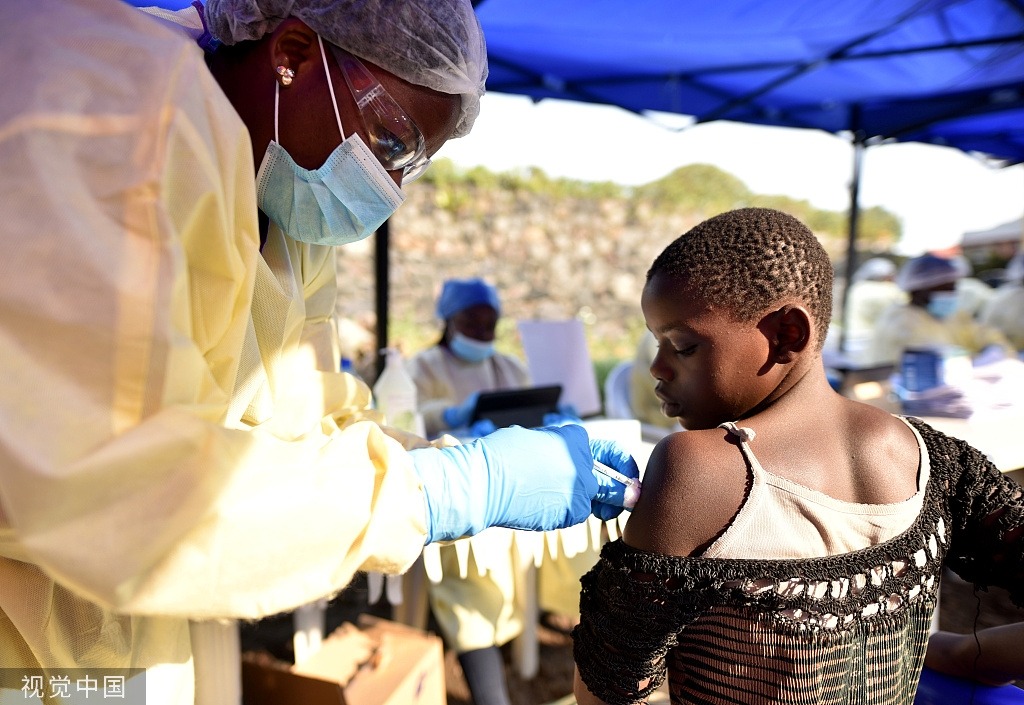
Health is not simply the absence of disease; it is the absolute foundation upon which all human potential is built. Without physical well-being, a child cannot learn, a parent cannot work to provide for their family, and a community cannot break free from the gravity of generational poverty. In the modern global landscape, we often take healthcare infrastructure for granted—the presence of a clinic down the street, an ambulance a phone call away, or a well-stocked pharmacy.
But for millions of people living in rural Ugandan communities, geography too often dictates destiny. In these underserved areas, a treatable infection can become a life-altering crisis, a lack of nutritional education can lead to irreversible childhood stunting, and childbirth remains one of the most hazardous journeys a woman can undertake.
At Equitable Life Organization International (ELOI), our journey began with a vision of holistic transformation—a vision sparked in 2004 by our founder, Tendo Steven, through mobile medical care and direct community outreach. We understood from day one that to achieve a vibrant Uganda where every individual thrives socially, economically, and spiritually, we had to meet people exactly where they were: at their point of greatest physical vulnerability. Through our landmark partnership with Buwenge Hospital and our multi-layered health initiatives, we are tearing down the walls of traditional clinical healthcare and taking life-saving medical care directly to the grassroots.
The Reality of Public Health in Rural Uganda
To understand why ELOI’s health interventions are structured the way they are, it is essential to confront the stark public health realities that define rural life in Uganda. While urban centers like Kampala have seen significant upgrades in medical infrastructure, the rural peripheries continue to struggle with systemic shortages, long transit distances, and deeply entrenched health crises.
1. The Maternal Health Crisis
Uganda has made strides in reducing maternal mortality over the last two decades, yet the numbers remain unacceptably high. The tragedy of maternal mortality in rural areas is that the vast majority of these deaths are completely preventable. They are driven by what public health experts call the “Three Delays”:
- Delay in deciding to seek care: Often caused by a lack of understanding regarding warning signs during pregnancy, or the requirement of spousal permission and financial control.
- Delay in reaching a health facility: Rural terrain, coupled with a lack of reliable or affordable transport, forces many laboring women to walk miles or travel on the back of a motorcycle (boda-boda) while in active labor.
- Delay in receiving adequate care at the facility: Caused by understaffed rural clinics, lack of electricity, or missing basic surgical and sanitary supplies.
2. The Heavy Burden of HIV/AIDS
HIV/AIDS remains an active, critical public health challenge across Uganda. While antiretroviral therapy (ART) has transformed HIV from a death sentence into a manageable chronic condition, accessing these medications consistently is an uphill battle for rural populations. Stigma continues to run deep in small villages, frequently preventing individuals from seeking testing or picking up their life-saving refills. Furthermore, mother-to-child transmission remains a persistent risk when pregnant women do not have access to prenatal screenings.
3. Childhood Malnutrition and Stunting
A child’s first 1,000 days—from conception to their second birthday—are critical for cognitive and physical development. In many agricultural regions of Uganda, families grow plenty of food, but it is often uniform subsistence crops like cassava or matooke (green bananas), which are high in carbohydrates but lacking in essential micronutrients, vitamins, and proteins. This nutritional deficit leads to chronic malnutrition and stunting, permanently limiting a child’s intellectual and physical potential before they even step into a classroom.
The Buwenge Hospital Partnership: A Strategic Hub for Community Care
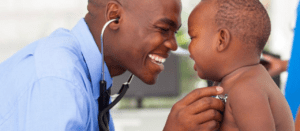
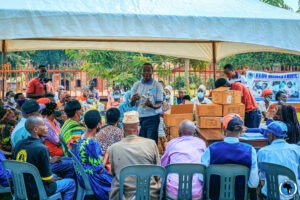
In 2013, ELOI formalized a foundational partnership with Buwenge Hospital. The objective was clear: to create a symbiotic relationship where an established medical facility could serve as a clinical anchor, while ELOI acted as the bridge expanding its reach deep into the surrounding villages through mobile clinics, resource mobilization, and targeted health education.
Rather than building competing, redundant medical structures, this partnership optimizes existing local assets. Buwenge Hospital provides the medical expertise, sterile surgical environments, and professional staff. ELOI brings the logistical framework, volunteer workforce, community trust, and targeted supplies needed to scale up their impact. Together, we have shifted the paradigm from waiting for patients to arrive at the hospital to proactively seeking out and protecting those in need.
Direct Interventions: Delivering Tangible Health Outcomes
ELOI’s health framework moves beyond high-level advocacy; it is defined by practical, life-saving interventions deployed across three main target areas:
1. Strengthening Maternal Care and Safe Delivery
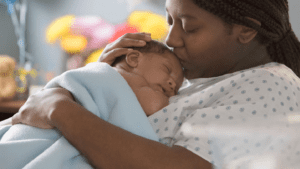
Every mother deserves to bring life into the world safely and with dignity. To combat the high rates of home births occurring in unsafe, unsterile conditions, ELOI implements a dual strategy of education and physical supply distribution.
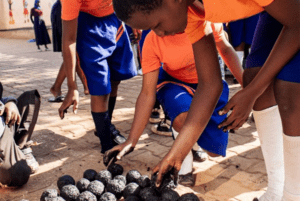
We conduct regular prenatal workshops in rural villages, teaching expectant mothers how to track their trimesters, recognize danger signs, and plan for a facility-based delivery. To bridge the gap when a facility delivery is complicated by sudden labor or extreme distance, we partner with organizations like the Birthing Kits Foundation to distribute clean birth kits.
These kits are simple but revolutionary. Containing basic items like a plastic sheet, soap, sterile gloves, a clean cord clamp, and a razor blade, they ensure that even if a woman must give birth at home or en route to a clinic, the risk of deadly postpartum infections like neonatal tetanus is drastically reduced.
2. Holistic HIV/AIDS Management and Stigma Reduction
Our approach to the HIV/AIDS epidemic is completely holistic, treating the medical, social, and psychological components of the disease simultaneously.
- Mobile Testing and Counseling: We run voluntary counseling and testing (VCT) camps during our community outreaches. By embedding HIV testing within general health camps (where people come for dental care, eye checks, or general checkups), we significantly lower the barrier of social stigma associated with visiting a standalone HIV clinic.
- Prevention of Mother-to-Child Transmission (PMTCT): We prioritize screening for pregnant women. If a mother tests positive, we immediately enroll her in a comprehensive care plan at Buwenge Hospital to ensure she receives the proper ART regimen, drastically lowering the transmission rate to her unborn child to nearly zero.
- Psychosocial Support Groups: Healing happens in community. ELOI facilitates support groups where individuals living with HIV can share their experiences, combat isolation, and encourage one another to remain adherent to their medical treatments.
3. Community Nutrition and Preventive Education
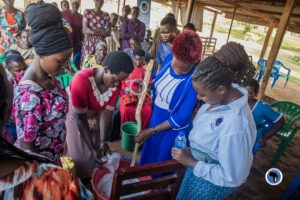
To break the cycle of childhood stunting, ELOI deploys community health workers into villages to conduct nutritional assessments and interactive cooking demonstrations. We teach parents how to optimize their existing agricultural yields by creating balanced meals using locally accessible, affordable ingredients—such as incorporating silver fish (mukene) for protein, alongside leafy greens and orange-fleshed sweet potatoes for vital vitamins.
Comparative Analysis: Traditional vs. Holistic Rural Healthcare Strategy
The differences between a passive, traditional medical model and ELOI’s community-integrated healthcare delivery highlight why our approach achieves long-term results:
| Healthcare Component | Traditional Medical Approach | ELOI’s Holistic Community Model |
| Delivery Model | Static facility; expects impoverished patients to find transit to the clinic. | Mobile outreach; medical teams travel directly into remote villages. |
| Maternal Strategy | Institutional care only; limited outreach to rural expectant mothers. | Universal prenatal tracking, education, and distribution of clean birth kits. |
| HIV/AIDS Care | Focuses strictly on clinical drug dispensing with minimal counseling. | Combines medical care with active stigma reduction and peer support groups. |
| Nutritional Focus | Reactive treatment of severe acute malnutrition in clinical wards. | Proactive education on dietary diversity using locally grown crops. |
The Intersection of Health, Education, and Justice
At ELOI, we maintain that our four core pillars—Health, Education, Justice, and Environment—do not exist in silos. They are deeply interconnected, forming a web of support that stabilizes a community.
Consider the direct relationship between health and education: a child suffering from chronic malaria or intestinal parasites cannot attend school consistently, and a hungry child cannot concentrate on a lesson. By bringing deworming campaigns, nutritional support, and mobile medical treatment to our sponsored children, we are directly protecting our educational investments.
Similarly, our health initiatives feed into our justice and women’s empowerment pillars. A healthy woman is an economically productive woman who can manage her micro-enterprise in Nakaseke, save in her local VSLA, and advocate for her family’s rights. By viewing public health through this expansive, integrated lens, we ensure that every dollar and hour spent on medical care yields dividends across the entire social structure of Uganda.
Empowering Global and Local Change-Makers
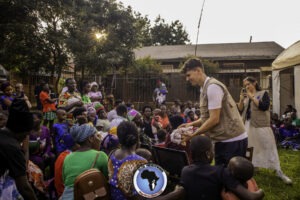
The massive footprint of our healthcare outreaches is made possible through a dynamic blend of local expertise and international solidarity. ELOI operates as an international hub for medical professionals, public health students, nursing interns, and passionate global volunteers who want to make a tangible, ethical impact on the ground.
When international healthcare volunteers join our teams at Buwenge Hospital or pile into our mobile clinic vehicles bound for deep rural villages, an invaluable dual-learning process takes place. International volunteers bring specialized medical knowledge, diagnostic techniques, and resources.
In return, they are completely transformed by learning how to practice resourceful, compassionate medicine in low-resource environments, guided by our experienced Ugandan medical staff. They witness firsthand the deep-seated resilience of the local people and gain a profound understanding of global health equity that cannot be taught in a university lecture hall.
Securing a Healthier Tomorrow
Over the past two decades, we have seen incredible changes across the communities we serve. We have seen mothers who once delivered on dirt floors bring healthy babies into the world in clean, sterile conditions. We have seen children who were once weak from malnutrition grow into vibrant, energetic students leading their classrooms. We have seen individuals who were once cast out of their villages due to HIV status stand tall as community health advocates.
These are not just numbers or statistics on an annual report; they are living testaments to what happens when hope is met with practical, strategic medical action.
However, our work is far from finished. The need for expanded mobile clinics, more robust maternal supplies, and wider health coverage remains immense. We refuse to rest while a person’s geographic location dictates their access to basic human dignity and life-saving care.
We invite you to stand with us. Whether you are a medical professional looking to volunteer your skills on the ground, a donor wanting to fund life-saving medical supplies, or an advocate helping us amplify our voice from afar—your partnership is the engine of our progress. Together, we can build a Uganda where health is a guaranteed right for all, and where every single child has the physical strength and opportunity to reach their full, God-given potential.