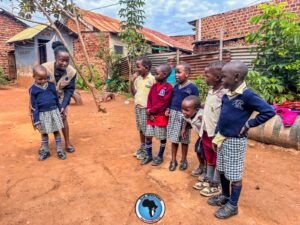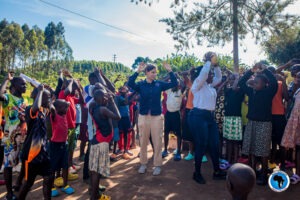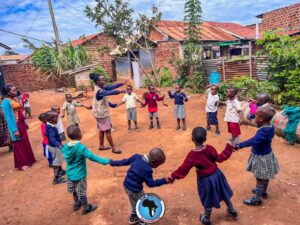
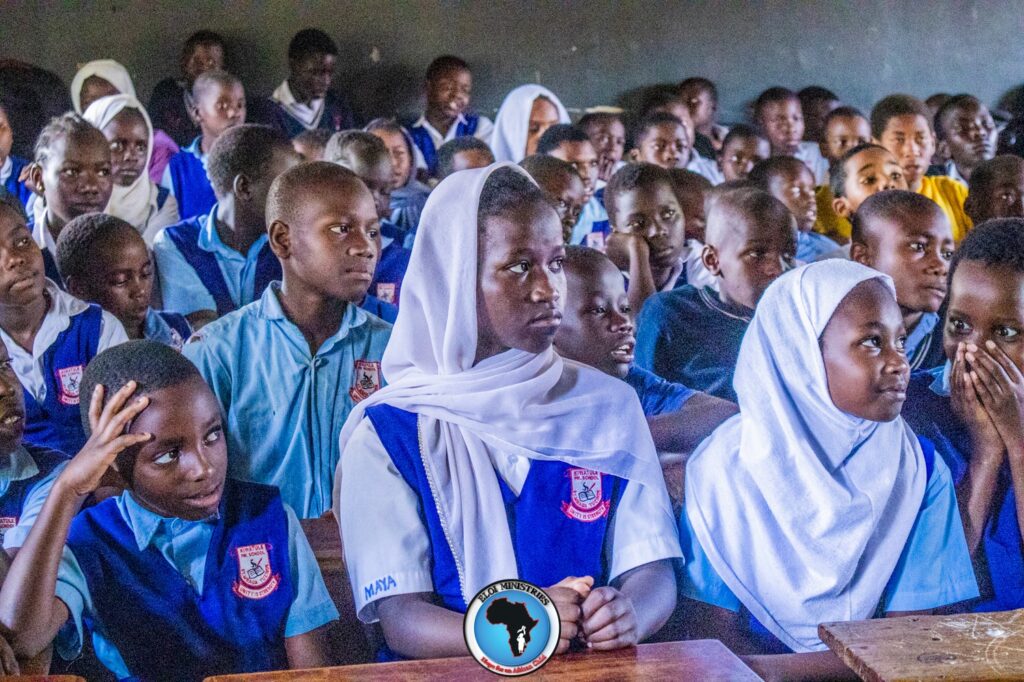
Literacy is often treated like a school skill—something measured by reading levels, classroom performance, or the ability to complete assignments. But for children, literacy reaches much farther than academics. Literacy becomes part of how a child understands information, participates in community life, and recognizes opportunities for growth.
At ELOI Africa, the goal is not only to help learners decode words on a page. The goal is to help learners build confidence that can carry into real life—confidence that strengthens education choices, community participation, and long-term development.
1) Literacy is a tool for participation
When a child can read, they can participate more fully:
- They can follow instructions without constant support.
- They can understand written guidance related to health and safety.
- They can ask questions with clarity.
- They can communicate more effectively with teachers, peers, and family members.
Participation matters because children learn not just from content, but from engagement. When learners are able to read, they can take part in learning instead of feeling left behind.
2) Literacy supports learning beyond primary school
Early literacy is especially important because it influences everything that comes later. As students move through grades, learning materials become more complex. If literacy foundations are weak, later learning becomes harder and more discouraging.
When literacy is supported early and consistently, students are more likely to progress academically and remain motivated. They are also better positioned to pursue education beyond the early years and explore vocational opportunities.
3) Education access needs continuity
Even the best curriculum cannot help a child who repeatedly misses school or lacks learning materials. Education access includes the ongoing support that helps a child stay in school long enough to develop literacy.
ELOI Africa emphasizes access to education alongside other community supports that reduce interruptions and strengthen a child’s learning journey. (eloiafrica.org)
4) Literacy must connect to real-life skills
A child’s literacy should support daily tasks:
- reading and interpreting simple forms or instructions,
- understanding how to communicate needs,
- recognizing information that protects health and safety,
- and building language confidence that helps learners engage with their community.
When literacy is connected to real life, reading becomes meaningful—not only an academic requirement.
5) Community impact grows when children gain agency
Children who gain literacy are not only improving their own futures. They also contribute to stronger communities. Literate children are better able to share understanding, interpret information, and support family communication. Over time, that creates ripple effects: more informed households, stronger participation in local learning, and greater community capacity.
ELOI Africa’s focus on hope and education access is rooted in that long-term vision. (eloiafrica.org)
Conclusion
Literacy is more than reading. It is dignity expressed through the ability to understand, participate, and pursue a future with confidence. When children gain literacy and continuity support, they are empowered to move from the classroom into everyday life as capable learners.
For ELOI Africa, turning literacy into lifelong confidence is the path toward durable hope—for individual children and for the communities that support them.