When people talk about education, they often focus on classrooms, teachers, and textbooks. But children do not learn in isolation. They learn in homes, communities, and environments shaped by health, safety, and access to justice. If a child is overwhelmed by illness, unsafe conditions, or a crisis within the family, education becomes harder—not because the child lacks ability, but because the learning environment is incomplete.
ELOI Africa’s mission is grounded in the belief that a child’s progress depends on more than school attendance. It depends on the ability to live with stability, understand and protect one’s health, and navigate social systems that should treat people fairly.
1) Education is connected to health
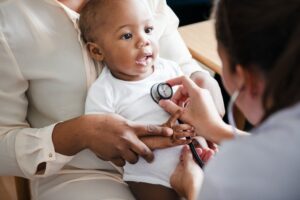
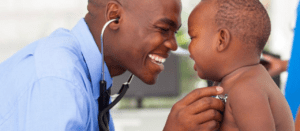
A child cannot concentrate in class if their body is unwell or if they are dealing with untreated health needs. Health impacts memory, focus, energy, and the ability to participate consistently at school.
That’s why holistic support matters: when health is strengthened, learning becomes more realistic. The classroom is no longer the only “solution,” because learning requires a stable foundation outside school walls.
ELOI Africa states that its work includes better access to healthcare alongside education and other supports for vulnerable communities. (eloiafrica.org)
2) Justice shapes what families can safely plan for
Access to justice affects families’ ability to protect children and maintain stability. When legal support is absent, when rights are difficult to defend, or when systems are out of reach for vulnerable people, stress increases and planning becomes uncertain.
This is not abstract. When families experience injustice, children often carry the consequences—through disrupted routines, insecurity, and loss of support. That instability can directly affect school attendance and progress.
By recognizing justice as part of wellbeing, ELOI Africa positions education as something that must be protected at multiple levels.
3) A child’s environment influences attendance and progress
Even if a child enrolls, education access can weaken if everyday life becomes unsafe or unstable. The ability to attend school consistently may depend on household resources, access to health support, and whether the child can remain in a stable environment long enough to build learning milestones.
That is why ELOI Africa’s approach is holistic: it aims to remove barriers that interrupt learning, not just address learning outcomes in isolation. (eloiafrica.org)
4) Holistic support is also about dignity
Holistic support is not only about efficiency—it is about dignity. Children should not have to choose between survival and education, or between health and learning. A truly supportive system helps families feel less alone and more able to protect their children’s rights.
When support includes health, justice, and education, it communicates something important: the child is valued beyond their role as a student. The child is valued as a person with a right to a future.
5) “Hope” becomes durable when support is consistent
Hope is often discussed as emotion. But hope becomes real when it is backed by practical support—support that continues over time and addresses the barriers that cause learning to stall.
ELOI Africa’s “Hope for an African Child” framing reflects that goal: hope is durable when children can learn consistently, stay safe, and grow. (eloiafrica.org)
Conclusion
Education is powerful—but it is not enough on its own when health, justice, and safety barriers remain. A child’s ability to learn is shaped by the total environment they live in. Holistic support protects attendance, strengthens literacy foundations, and helps families navigate difficult realities with more stability.
For ELOI Africa, protecting education means protecting the conditions where learning can truly take root.